How we helped a luxury fashion retailer turn $740K in ad spend into $9M in one Q4
An established retail brand, already a nine-figure business through its own stores, wanted its online arm to catch up. Instead of flooding the store with discounts, we fixed the conversion path, used hero products as entry points and split Black Friday into six waves.
At a glance
MediaBoostr helped the direct-to-consumer arm of a nine-figure luxury fashion retailer generate $9M in online revenue in one Q4 on $740K in ad spend. The work combined conversion rate optimization on existing traffic, hero products as entry points for new customers, new landing pages and advertorials, and a Black Friday season split into six waves that relied on scarcity rather than deep discounts.
- Brand
- Luxury fashion, established retail chain with an online store
- Market
- Europe, women 16–65
- Period
- One Q4 (holiday season)
- Channels
- Meta ads (Facebook & Instagram), online store
- Services
- CRO, product & landing pages, advertorials, paid ads, sale strategy
The starting point
The brand was a well-established luxury retailer, already a nine-figure business through its own stores, with strong brand awareness and plenty of traffic to its online shop. So the job was to turn existing demand into more online revenue and profit, and to use ad spend for incremental sales instead of paying for customers who would have bought anyway.
1. Conversion first: more from the traffic they already had
When a brand already has traffic, the cheapest growth is on the site. We worked with the brand's team on conversion rate optimization and product page improvements, so more of the existing visitors bought and each visit was worth more.
2. Hero products as the front door
Luxury brands can't live on discounts, so we didn't build the growth on offers. Instead, we identified the product winners, the pieces new customers wanted most, and used them as entry points in ads and on dedicated landing pages. We also tested advertorials to build awareness with audiences who didn't know the brand yet.
3. Black Friday, split into six waves
The biggest lever was the sale calendar. Instead of one discount weekend, we started Black Friday earlier and split the season into six waves:
- Pre-Black Friday
- Singles Day
- Last chance before Black Friday
- Black Friday
- Cyber Monday
- Post-Black Friday
Each wave reached a different segment of the market, from early planners to last-minute buyers, instead of everybody fighting over the same weekend.
The hook was scarcity: we told customers that certain products would probably sell out before Black Friday, so if they wanted them, they had to buy now.
“It wasn't the maximum saving. But people were competing for a very desirable product, and they actually played that game with us.”
Pedram Ghozat, founder of MediaBoostr
The results
- $9M in online revenue in one Q4.
- $740K in ad spend over the same quarter.
- About 12x blended ROAS: all online revenue divided by ad spend.
- An estimated 6–7x ROAS attributable to paid ads, since part of the revenue came from the brand's existing demand.
- A holiday season that relied on scarcity instead of deep discounts, protecting a luxury brand's margins and positioning.
A note on the numbers: blended ROAS (sometimes called MER) divides all online revenue by ad spend. For a brand with strong existing demand, it will always look higher than the return that paid ads alone created. That's why we show both.
Inside the ad account
The Q4 above was one part of a longer run of work with this brand. Below is its Meta ad account over the 13 months around that Q4, as Ads Manager reported it, with campaign names blurred.
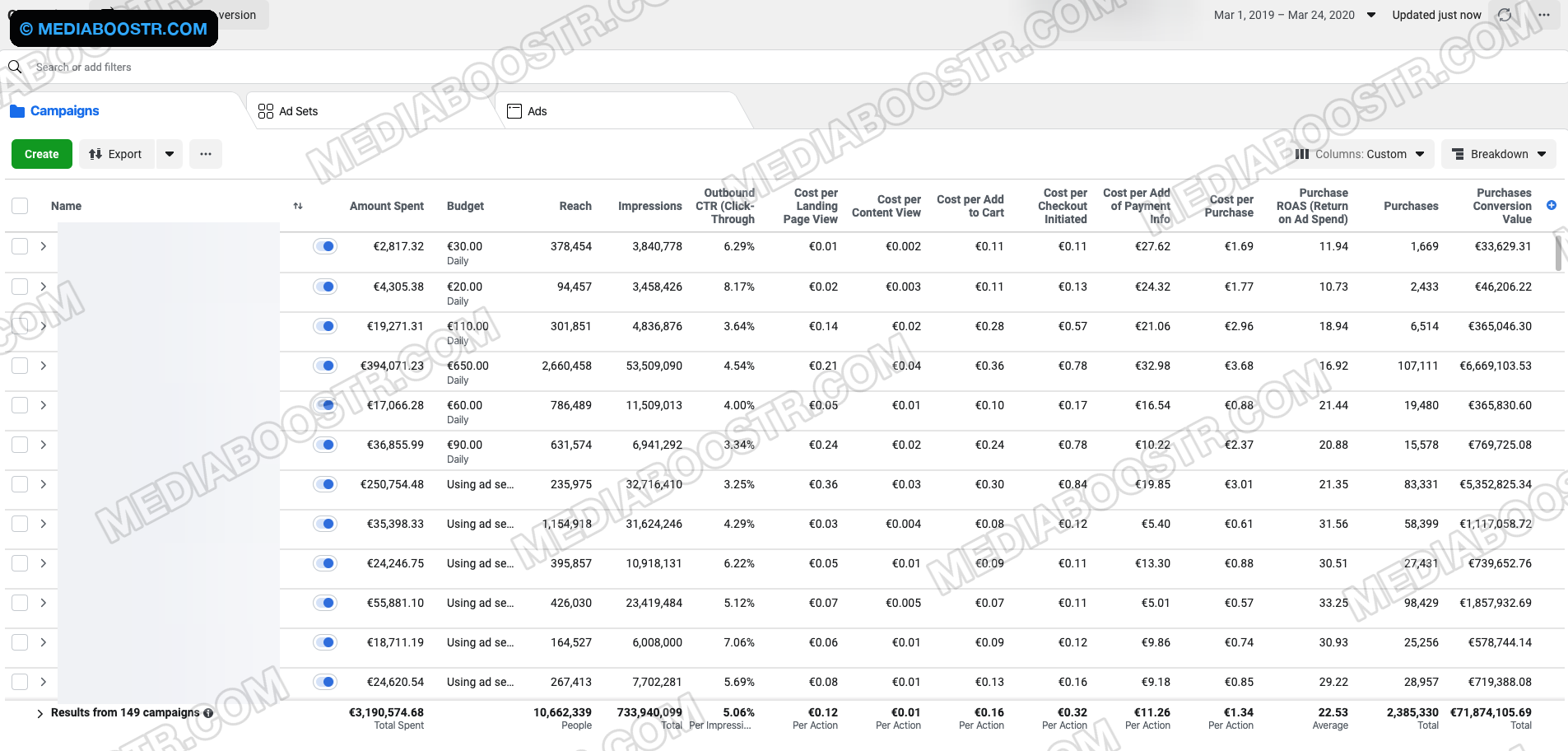
- Amount spent is the total ad spend across all 149 campaigns in those 13 months.
- Purchase value and ROAS are Meta's own attribution. Meta credits a purchase to an ad when the buyer clicked or viewed it within the attribution window, and that includes existing customers and people who would have bought anyway.
- That is why 22.5x sits far above our estimate of 6 to 7x for what paid ads alone added.
- This view covers a different period and a different measure from the Q4 figures above, so the two sets of numbers shouldn't be added together or compared one to one.
Lessons for your next big sale
- If you already have traffic, start with conversion. It's the cheapest revenue you'll find.
- Lead with your best products, not your biggest discount. Hero products make the best entry points for new customers.
- Stretch the holiday season. Several waves reach more buyers than one crowded weekend.
- Use scarcity where it's true. For desirable products it can outperform a deeper discount.
- Judge ads by incremental revenue, rather than blended numbers.
We run Q4 the same way today, for DTC brands and for retail brands that want their online store to catch up.
FAQ
Was the ROAS really 12x?
12x is the blended return: all online revenue in the quarter ($9M) divided by ad spend ($740K). The brand already had strong demand from its retail business, so part of that revenue would have come without ads. We estimate the return attributable to paid ads was closer to 6–7x.
How do you run Black Friday for a luxury brand without heavy discounts?
Split the season into waves (pre-Black Friday, Singles Day, last chance, Black Friday, Cyber Monday, post-Black Friday) so each one reaches a different segment, and let genuine scarcity on desirable products do the work a deep discount usually does.
What do you change for a brand that already has a lot of traffic?
Conversion rate optimization and better product pages first, then hero products as entry points for new customers, and ad spend aimed at incremental revenue rather than sales that would have happened anyway.
Does this work for retail brands with an online store?
Yes. Retail brands usually have awareness and demand that their online store doesn't fully capture. Optimizing the online funnel and using ads for incremental reach lets the DTC arm grow from that existing strength.
Related guide: Black Friday without deep discounts: the six-wave sale season